
Recruiting Workflow
Why US Account Managers Reject 60% of Night-Shift RPO Submittals by 9 AM
Every US staffing desk lead knows the 8:15 AM EST routine. You open Bullhorn or JobDiva expecting five ready-to-submit candidates from your night-shift RPO team in Hyderabad, Noida, or Manila. Twelve resumes sit in the queue. By 9:00 AM, you have rejected eight of them, and you are manually reformatting the remaining four while the client's Beeline requisition hits its 15-submission cap.
Offshore sourcers rarely fail because of work ethic. They fail because the handoff between a high-volume night shift and a client-facing US account manager relies on guesswork, messy Word macros, and rushed keyword matching. When a recruiter working at 3:00 AM IST is judged solely on raw submittal volume, quality checks collapse.
Where the 8:00 AM EST Handoff Actually Breaks
- Keyword matching without production context — A sourcer sees 'AWS' and 'Kubernetes' on a PDF and logs a submittal. When the US account manager reads the project history, the candidate only attended a three-day bootcamp in 2022 and hasn't touched an EKS cluster in production.
- Broken Word tables on agency templates — Night-shift recruiters copy-paste bullets from two-column Canva PDFs into your agency's master
.docxheader. By the time the file lands on the US desk, tab stops are shattered, bullet indents are misaligned by 0.5 inches, and three different fonts appear on page two. - Missing visa and location ground truth — The submittal note says 'Open to relocate to Plano, TX (Day 1 Onsite),' but nobody asked if the candidate's spouse works locally or verified whether their H-1B transfer requires a fresh client letter from an unwilling tier-one vendor.
- Unverified employment date overlaps — A candidate lists a full-time W2 role at a bank alongside an overlapping 18-month C2C contract, inflating a four-year career into six years of claimed experience.
Replacing Raw Resume Dumps with a Standardized 4-Step Night-Shift Protocol
If you want your US account managers submitting to the VMS at 8:30 AM instead of playing copy-editor until noon, stop letting night-shift teams send raw resumes with four-line email summaries. Enforce a deterministic pre-flight workflow before a candidate is ever marked 'Ready for AM Review' in your ATS.
First, strip the ambiguity out of the requisition before the shift starts. Have the lead sourcer run the raw client spec through the JD Analyzer to separate non-negotiable production requirements from wishlist fluff, visa exclusions, and onsite mandates. Pair that output directly with the Boolean & X-Ray Generator so junior sourcers pull targeted LinkedIn Recruiter and Dice strings instead of blasting generic keyword searches.
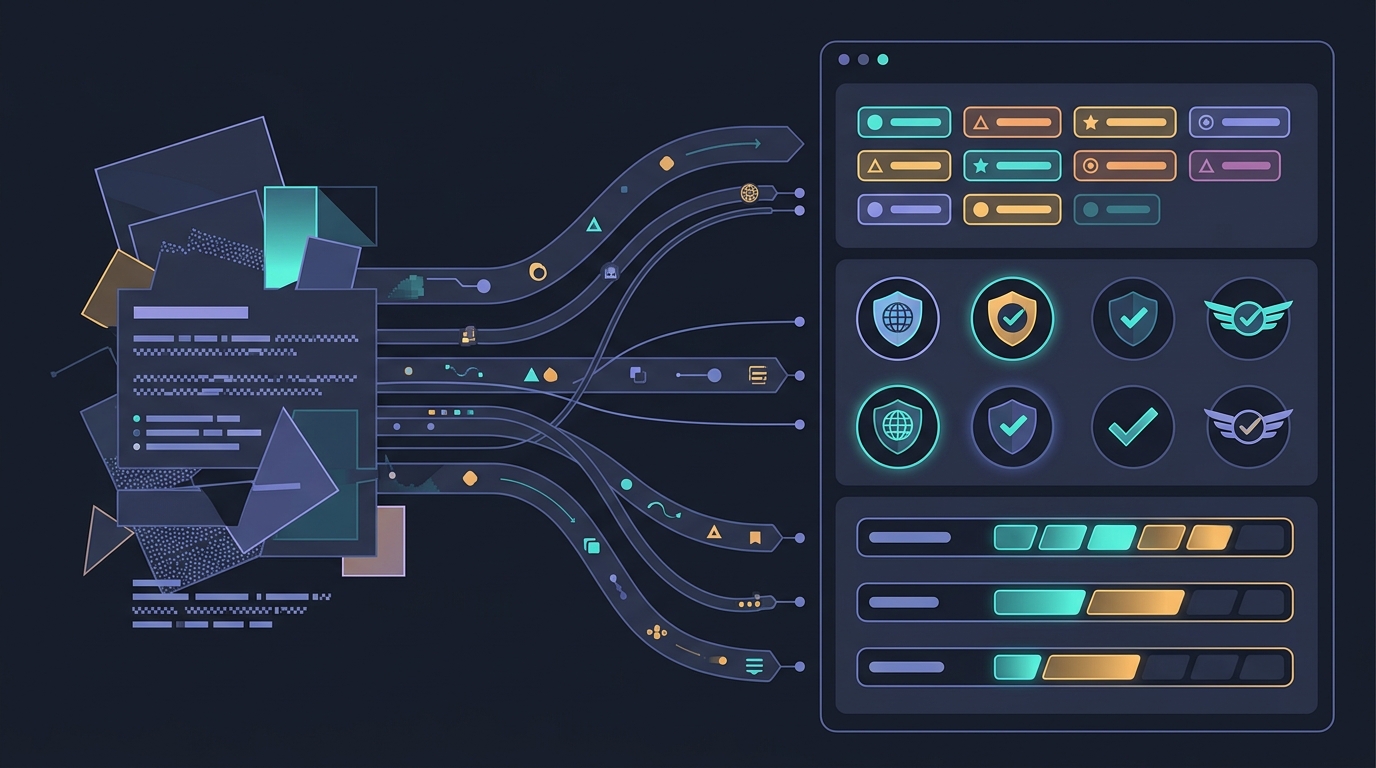
Second, eliminate gut-feel screening. Before an offshore recruiter picks up the phone, have them drop the candidate's file into the Resume Analyzer and the Experience Calculator. In ten seconds, they can see exact chronological gaps, overlapping contract dates, and whether a skill was used in a recent enterprise project or buried in a college internship.
Auditing the Shortlist Before the US Desk Wakes Up
- Require a requirement-by-requirement verification grid — Stop accepting vague '8/10 match' notes in Ceipal. Have the night shift run the Resume Matcher against the job description to generate an explicit requirement verification table showing where the candidate hits or misses each technical mandate.
- Script the 10-minute technical phone screen — Offshore recruiters often struggle to vet niche US cloud or data architectures on live calls. Equip them with role-specific prompts from the Screening Questions tool so they ask concrete scenario questions and record the candidate's actual answers.
- Rank the top 3 instead of dumping 10 — When a requisition only allows two VMS slots, an account manager does not want ten mediocre profiles. Require the night lead to run Compare Candidates across their best four screens and hand over only the top two winners.
Zero-Hallucination DOCX Formatting and Ready-to-Send Pitches
The biggest time thief at 8:30 AM is document cleanup. Worse, some offshore teams paste candidate resumes into generic chat prompts to speed up formatting—accidentally rewriting job titles, inventing metrics, and creating a massive compliance liability when the candidate gets grilled in a technical interview.
Lock down document prep by routing every shortlisted file through the Resume Formatter. It parses messy PDFs and maps the candidate's exact original wording into your master Word layout from the Resume Templates Gallery—whether you need a clean US staffing standard or a specific enterprise layout like Ametek, TCS, Wipro, or Microsoft. The engine never alters or fabricates a single bullet point, and free 0-credit re-renders let the US account manager swap templates in seconds if the MSP asks for a blind version. Agencies can also configure Agency Branding so every internal preview and exported header carries their exact logo and color scheme.
Finally, require every morning handoff packet to include two text blocks ready to copy and paste: a concise executive brief from the Recruiter Summary tool for the VMS comment box, and a tailored hiring manager note built with the Email Generator. Check out our fixed-credit Pricing—where one tool run equals one credit with zero seat bloat—or open the Free Toolkit right now and run your next night-shift shortlist through a real pre-submittal audit.
Enorexa Recruiter
Try the tool this article is about — upload or paste, then copy or download. No candidate database.
Open the free toolkit